
OPEN HOURS:
SAC Gallery is temporarily closed.
For more information: info@sac.gallery

(English is below)
ในเมืองใหญ่อย่างกรุงเทพฯ ห้างร้านที่เคยผ่าน ริมถนนหนทางที่ก้าวเท้า เราอาจจดจำแค่บางสิ่งที่ดูยิ่งใหญ่ เด่นสะดุดตา และหลงลืมหลายสิ่งอย่างที่ดูไม่สลักสำคัญ
ระหว่างเดินผ่านสถานที่ซ้ำๆ มุมเดิมๆ ในชีวิตประจำวัน บางครั้งอาจทำให้เราละเลยที่จะมองบางสิ่งที่ดูธรรมดาอย่างตั้งใจ
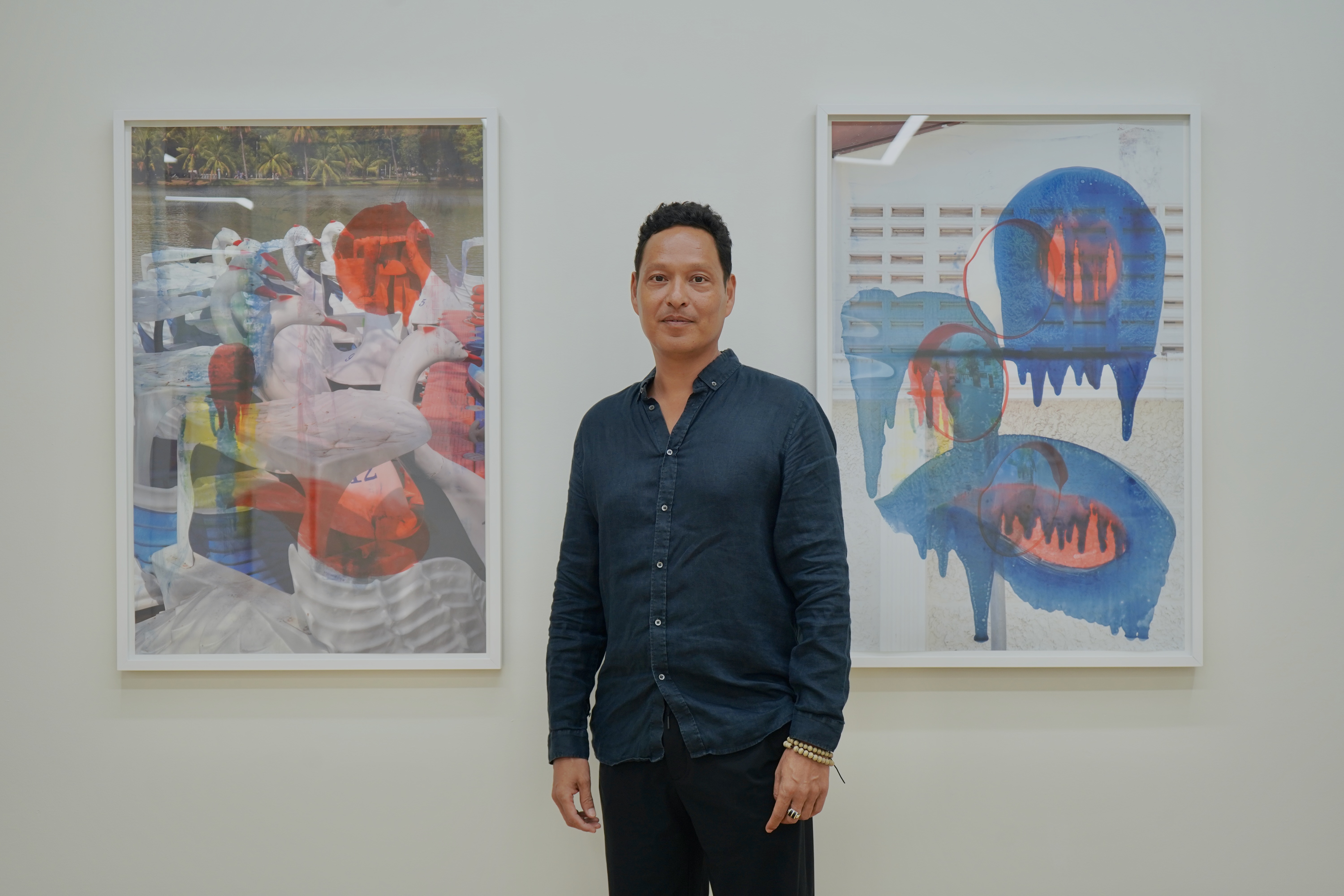
“Second Pass” คือนิทรรศการเดี่ยวครั้งใหม่ของ ทาชิ บราวเอน (Tashi Brauen) ศิลปินชาวสวิส ที่กลับมาจัดแสดงในประเทศไทยอีกครั้ง
เขาตั้งใจชวนผู้ชมชะลอจังหวะชีวิตให้ช้า หันกลับมาให้ความสำคัญกับบางสิ่งที่ดูเหมือนธรรมดา ผ่านงานภาพถ่ายที่เขาออกเดินไปตามตรอกซอกซอยในเมือง เฝ้าสังเกตสิ่งเล็กสิ่งน้อย รูปทรงต่างๆ ที่อาจไม่สลักสำคัญในสายตาของบางคน หยิบมาใช้เทคนิคการพิมพ์สีและนิตยสารเก่ามาขับเน้นให้สิ่งเหล่านั้นน่าสนใจขึ้น
งานทั้งหมดนี้เขาเลือกสร้างงานระหว่างเป็นศิลปินในพำนักที่กรุงเทพฯ และเชียงใหม่ โดยไม่ได้นำงานเก่าจากสวิตเซอร์แลนด์มาด้วย เพื่อให้งานครั้งนี้ดูสดใหม่และสะท้อนสิ่งที่เกิดขึ้นกับเขาในกรุงเทพฯ
“มันเป็นการเดินทางที่รวมเอาการวาดภาพและภาพถ่ายเข้าด้วยกัน” เขาเล่าถึงงานครั้งนี้ระหว่างการสนทนาข้ามทวีปจากฝรั่งเศส
เรื่องที่คุยกันมีตั้งแต่ความสัมพันธ์ของเขากับประเทศไทย การทำงานในฐานะศิลปินในพำนัก หลายมุมที่เขาพบเจอระหว่างสร้างสรรค์ผลงานในเมืองไทย ไปจนถึงเบื้องหลังของนิทรรศการครั้งนี้

01
“ครั้งแรกน่าจะประมาณ 20 ปีก่อน ผมมาแบ็กแพ็กกับแฟน เราไปกันนานมาก นั่งรถบัสขึ้นเหนือไปเชียงใหม่ แล้วก็ไปลาวด้วย เป็นการเดินทางด้วยรถบัส นั่นคือครั้งแรก หลังจากนั้นผมก็ไม่ได้มาอีกนานเลย” เราชวนทาชิเล่าย้อนถึงเมืองไทยในความทรงจำครั้งแรก
ที่ผ่านมา งานของเขาเคยจัดขึ้นหลายที่ในไทย เช่น Serindia Gallery รวมถึงนิทรรศการเดี่ยว “Hold on to That Paper Again” ที่ SAC Gallery ร่วมมือกับ Ronewa Art Projects และสถานเอกอัครราชทูตสวิตเซอร์แลนด์ประจําประเทศไทย
“รวมๆ แล้วก็เหมือนมาตลอดช่วงชีวิต แต่ที่ผ่านมาเป็นทริปสั้นๆ แค่ประมาณสองสัปดาห์” ศิลปินยิ้ม
การมาเยือนไทยครั้งนี้ของทาชิต่างออกไป เขามาเป็นศิลปินในพำนักของ SAC Residency ที่กรุงเทพฯ และเชียงใหม่ มองหาแรงบันดาลใจในการทำงานจากเมืองใหญ่ทั้งสอง เขาตระเวนไปตามย่านต่างๆ ในเมืองหลวงของไทย และสำรวจเมืองธรรมชาติอย่างเชียงใหม่
รอบนี้เขาใช้เวลา 59 วัน หรือเกือบ 2 เดือน นานกว่าทุกครั้งที่เคยมา นานพอที่ทำให้เขาได้เห็นแง่งามใหม่ๆ ที่ยังไม่เคยพบมาก่อน อีกทั้งการมีสตูดิโอสำหรับผลิตงานในกรุงเทพฯ ยิ่งทำให้เขาตั้งใจและมีสมาธิกับงานมากขึ้น

โปรเจกต์นี้เริ่มเมื่อช่วงต้นปี 2026 อากาศในเมืองร้อนกำลังสบายพอให้ออกเดินไปทั่วเมืองได้ทุกวัน ได้เก็บเกี่ยวสิ่งต่างๆ ระหว่างทางผ่านทั้งสายตาและเลนส์กล้องถ่ายภาพ แล้วหอบหิ้วกลับมาทำงานในสตูดิโอ
“โอ้ ตอนนี้เดินมากไม่ได้แล้ว” ศิลปินชาวสวิสว่าขำๆ ตอนที่เขาเผชิญกับอากาศเปลี่ยนแปลงอย่างฉับพลัน หลังจากทำงานได้ไม่นาน “เรื่องสภาพอากาศคือความแตกต่างที่ใหญ่มากเมื่อเทียบกับสวิตเซอร์แลนด์ เพราะตอนคุณเดินคุณจะรู้ซึ้งเลยว่าระยะทางบวกกับความร้อนมันเป็นอย่างไร” เขาเล่าถึงเหตุการณ์ที่เจอระหว่างทำงานอย่างอารมณ์ดี
02
"จังหวะชีวิต" ของคนในแต่ละมุมเมือง เป็นสิ่งที่เขาสังเกตเห็นผ่านการสำรวจ บางย่านก็พลุกพล่านเร่งรีบ บางย่านสงบเงียบ บางเมืองดูวุ่นวาย ขณะที่บางเมืองกลับใช้ชีวิตอย่างเนิบช้า
“ประสบการณ์ส่วนใหญ่เกิดจากการเดินไปในเมืองโดยไม่มีจุดหมาย ความไม่คาดคิดกลายเป็นสภาวะปกติที่เกิดขึ้นจากการเดิน มากกว่าการตั้งใจค้นหา ผมปล่อยให้ตัวเองถูกนำทาง ไม่ใช่แค่ด้วยภาพที่เห็น แต่รวมถึงเสียง กลิ่น และบรรยากาศของพื้นที่ ประสาทสัมผัสเหล่านี้พาผมไปยังย่านต่างๆ”
ตลาดน้อย เยาวราช พาหุรัด สยามฯ สวนลุมพินี ปากคลองตลาด ตลาดนัดจตุจักร กุฎีจีน ถนนวิทยุ รวมถึงพื้นที่ใกล้ๆ สตูดิโอที่ใช้ทำงานที่ SAC Gallery คือย่านในกรุงเทพฯ ที่เขาเดินทางไปสัมผัส บางที่ไปมากกว่า 1 ครั้ง ได้มุมมองใหม่ไม่ซ้ำ และนั่นกลายเป็นส่วนหนึ่งของภาษาภาพและแนวคิดหลักของผลงานครั้งนี้ในที่สุด

“ตอนนี้ผมรู้จักกรุงเทพฯ ดีขึ้นนิดหน่อยว่าอะไรอยู่ตรงไหน เพราะกรุงเทพฯ ใหญ่มาก ทุกครั้งที่ผมกลับมามันเหมือนเป็นที่ใหม่เสมอ ครั้งนี้เลยดีมากที่ได้อยู่นานขึ้นและได้เห็นความใหญ่โตและความหลากหลายของย่านต่างๆ ในกรุงเทพฯ”
หลังจากใช้เวลาในกรุงเทพฯ 5 สัปดาห์ ทาชิเปลี่ยนจังหวะชีวิตของตัวเอง เบนเข็มทิศขึ้นเหนือไปเชียงใหม่ พารูปถ่ายจากเมืองกรุงไป Hello, Print Friend Studios สตูดิโอภาพพิมพ์ที่นั่น
“ผมมีรูปถ่ายจากกรุงเทพฯ ที่ยังไม่ได้พิมพ์ เลยไปหาเพื่อนที่นั่น แล้วเธอก็ช่วยเรื่องการพิมพ์ในสตูดิโอ ผมอยากลองพิมพ์เทคนิค Monotype ลงบนรูปถ่ายของผมเอง เลยไปหาร้านพิมพ์รูปขนาดใหญ่ในเชียงใหม่”
การได้ไปทำงานในสองเมืองที่มีความแตกต่างหลายสิ่ง ย่อมทำให้มุมมองในการทำงานและบทสนทนาใน Second Pass เต็มไปด้วยรายละเอียดมากขึ้น
“เชียงใหม่สวยงามมาก ความรู้สึกแรกที่ไปถึงคือ ‘ว้าว’ ผมเห็นท้องฟ้าสีฟ้าในตอนนั้น เห็นธรรมชาติอยู่รอบตัวใกล้มาก มันต่างจากกรุงเทพฯ ที่เร่งรีบ อากาศก็ต่างกัน เชียงใหม่เหมือนเป็นย่านเล็กๆ ย่านหนึ่งในกรุงเทพฯ คุณสามารถไปไหนมาไหนด้วยจักรยานได้ใน 10 นาที ทุกอย่างสะดวกมาก ผมทำงานได้เข้มข้นมากใน 10 วันนั้น ผมชอบจังหวะชีวิตที่นั่นมาก
“ความต่างที่สุดคือเชียงใหม่ถูกล้อมรอบด้วยธรรมชาติที่ใกล้มาก คุณมองเห็นภูเขาสวยงามจากโรงแรม และคุณอยู่ติดดินมากกว่า มีตึกสูงน้อยกว่า มันเห็นจุดสิ้นสุดของเมือง” ทาชิมองว่าสิ่งเหล่านี้ทำให้เชียงใหม่คล้ายกับสวิตเซอร์แลนด์ บ้านของเขา
กลับกัน ขณะที่กรุงเทพฯ นั้น “คุณต้องคิดเสมอว่าจะไปยังไง รถติดไหม คุณไม่สามารถทำหลายอย่างได้ในวันเดียวเพราะการจราจร เชียงใหม่สำหรับผมเลยมีรถติดน้อยกว่ามาก กรุงเทพฯ คือความวุ่นวายที่บางครั้งมันก็ดีที่มีทั้งสองด้าน แต่เชียงใหม่คือความเงียบ สงบกว่า คนเดินด้วยจังหวะที่ต่างออกไป” เขาสรุปให้ฟังถึงสิ่งที่ได้รับและนำมาทำงานในระหว่างพำนัก
03
ถ้าเคยชมผลงานเก่าๆ ของทาชิ คุณจะเห็นความต่างหลายประการจากผลงานปัจจุบันที่กำลังแสดงอยู่ งานซีรีส์เก่าๆ มักเต็มไปด้วยสีสัน เน้นความเรียบง่าย เป็นงานแนวนามธรรมที่อาจต้องใช้เวลาพยายามทำความเข้าใจ
ทว่าสำหรับงานครั้งนี้ เขาหยิบเทคนิคต่างๆ เข้ามาใช้มากขึ้น โดยเฉพาะการคอลลาจนิตยสารเก่าและภาพถ่ายสตรีท เข้ากับการใช้สีที่ถนัด ซึ่งเป็นวิธีการทำงานที่เขาเริ่มต้นเมื่อ 5 ปีก่อน ด้วยการลองทำงานกับนิตยสารเชิงวัฒนธรรม-เชิงคลังข้อมูลในสวิตเซอร์แลนด์อย่างต่อเนื่อง
“ภาพจากนิตยสารทำหน้าที่เป็นชิ้นส่วนของเวลา เป็นตัวพาหะของวัฒนธรรม ภาพในอดีตที่ถูกนำกลับมาใช้งานในปัจจุบัน ผมสนใจสถานะของมันในฐานะทั้งเอกสารและร่องรอย เมื่อนำมาซ้อนและจัดเรียงใหม่ ก็ได้สร้างกลุ่มความหมายใหม่ขึ้น”
เมื่อมาฝังตัวทำงานในไทย เขามองหานิตยสารไทยมาใช้ในงาน จังหวะที่เห็นวิดีโอเบื้องหลังการทำงานนิทรรศการ "To fall from grace" ของศิลปินชาวไทยอย่าง บอล-นรภัทร ศักดิ์อาธรทรัพย์ ซึ่งเพิ่งจัดแสดงไป มีนิตยสารเก่าแทรกอยู่ เขาเลยขอทีมงานของแกลเลอรีช่วยชี้ทางแหล่งขายนิตยสารเก่าให้
“เธอแนะนำว่าลองไปดูที่ตลาดนัดจตุจักรดู พอผมไปที่นั่น ผมเจอร้านนิตยสารและหนังสือเยอะมาก ผมไม่เคยเห็นอะไรแบบนี้มาก่อน ผมรื้อดูผ่านฝุ่นเหล่านั้นแล้วรู้สึกว่า ‘ว้าว นี่มันคือประวัติศาสตร์วัฒนธรรมของไทยที่อยู่ในนิตยสารเหล่านี้’ ”
ที่นั่นเขาเจอนิตยสารหลากหลายประเภท ทั้งเรื่องศิลปะและแฟชั่น เขานำติดมือกลับมาที่สตูดิโอ แล้วจึงเริ่มต้นกระบวนการกดพิมพ์สี ร่วมกับภาพถ่าย เพื่อสร้างบทสนทนาที่เขาต้องการสื่อสารไปถึงผู้ชม
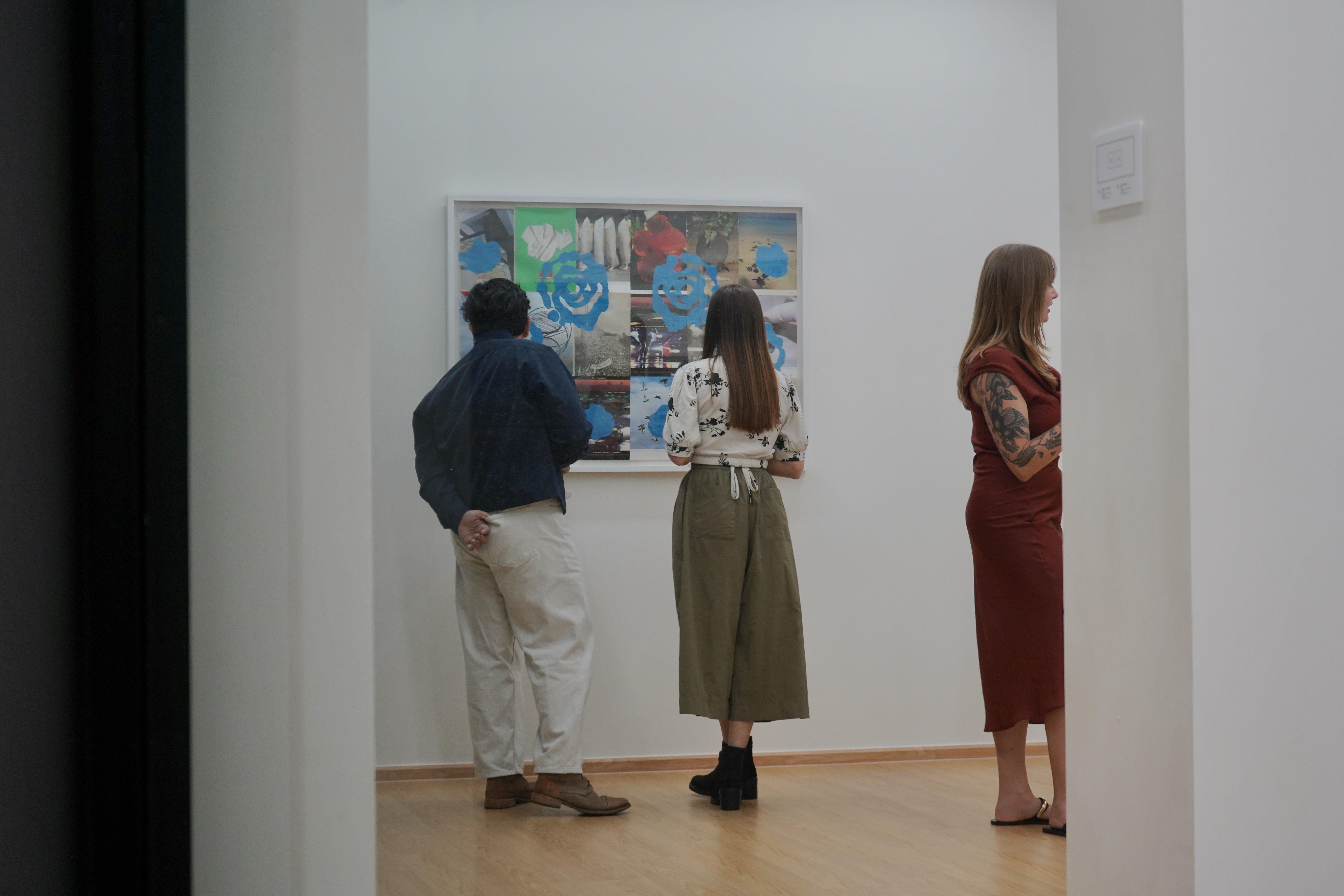
“ผมขยายวิธีนั้นโดยใช้วัสดุท้องถิ่น และวางคู่กับภาพถ่ายของตัวเอง สร้างบทสนทนาระหว่างภาพที่พบเจอกับประสบการณ์จริง ครั้งนี้ผมอยากลองผสมผสานมุมมองของผมกับมุมมองของไทยในอดีตเข้าด้วยกัน”
ความบังเอิญที่เกิดขึ้นจากการทำงานด้วยการใช้วัสดุที่หาได้ตามตลาดในไทย คือเมื่อทาชินำนิตยสารไทยมาใช้ เลยมีตัวหนังสือภาษาไทยอยู่ด้วย สิ่งนี้เข้ามาทำหน้าที่ช่วยเล่าเรื่องในงานของเขาอีกแรง งานในไทยครั้งนี้ยิ่งสนุก โดยเฉพาะกับผู้ชมชาวไทยที่อ่านภาษาไทยได้
“ตอนผมใช้นิตยสารสวิสที่บ้าน มันเป็นภาษาเยอรมัน ข้อความเหล่านั้นช่วยเล่าเรื่อง แต่ในกรุงเทพฯ ผมรู้สึกอิสระกว่าเพราะผมอ่านไม่ออก ผมดูแค่รูปภาพแล้วก็กดพิมพ์ลงไป ในขณะเดียวกัน มันก็เปิดให้เกิดการตีความแบบอื่น โดยเฉพาะผู้ชมชาวไทยที่สามารถอ่านภาษาได้ ซึ่งอาจรับรู้ชั้นของภาษาแตกต่างออกไป ความหลากหลายของการตีความนี้เป็นสิ่งที่ผมเปิดรับ
“ผมรู้ว่าคนไทยอ่านแล้วขำ เพราะมันมีความหมายอีกชั้นหนึ่งที่ผมไม่รู้มาก่อน เช่น มันคือโฆษณาเก่าของ Reebok หรืออะไรแบบนั้น ผมชอบที่มันมีความหมายที่ผมควบคุมไม่ได้ แต่สร้างความสนุกให้กับคนไทยที่ได้อ่าน”
อีกอย่างคือการใช้ Panit Folds หรือการพับสี เทคนิคง่ายๆ ที่หลายคนเคยทำตั้งแต่เด็ก เขาบอกว่าหยิบสิ่งนี้กลับมาใช้พิมพ์ลงบนงานเมื่อช่วงโควิด-19 ระบาด เมื่อสตูดิโอต้องปิด อุปกรณ์หลายอย่างไม่เอื้ออำนวย เขาเลยกลับมาสร้างผลงานด้วยวิธีง่ายๆ ไม่ต้องมีพิธีรีตอง
“ผมชอบความเรียบง่ายนี้ งานของผมแม้จะดูเหมือนผ่านการคิดมาเยอะ แต่ผมอยากให้มันดูเข้าถึงง่าย ให้คนดูรู้สึกว่า ‘โอ้ เจ๋งจัง ฉันก็ทำได้เหมือนกัน’ ผมชอบความรู้สึกที่ผู้คนเข้าถึงงานศิลปะได้แบบนี้
“ผมบีบสีจากหลอดแล้วใช้งานเลย ไม่ได้วางแผนเรื่องสีไว้ล่วงหน้ามากนัก แต่จะดูจากรูปในนิตยสารว่าอันนี้น่าจะเหมาะกับสีส้มนะ หรือสีเขียวตัวนี้ดูดี แต่พอเรากดพิมพ์ลงไป ผลลัพธ์มันจะเปลี่ยนไปเสมอ มันมีความบังเอิญอยู่ในนั้น”

04
การทำงานในดินแดนตะวันออกไกลของศิลปินชาวสวิสครั้งนี้ เขามีคอนเซปต์มาบ้างแล้วจากบ้าน แต่แทบทุกกระบวนการเขาลงมือทำในไทยทั้งหมด มีตัวแปรคือเวลาอันจำกัด ตามเวลาวีซ่าที่ให้อยู่ได้ 60 วัน
“หลายคนบอกว่ามันสั้นมาก บางศิลปินใช้เวลา 1-5 ปี แต่ผมชอบความกดดันของเวลาที่จำกัดแบบนี้ เพราะมันทำให้ผมไม่ต้องคิดมากเกินไป การมีเวลาเยอะไม่ได้แปลว่าจะมีความสร้างสรรค์เยอะเสมอไป พลังงานที่ใส่ลงไปในระยะเวลาอันสั้นนี่แหละคือสิ่งที่ผมได้จากการมาเป็นศิลปินในพำนักครั้งนี้
“แต่พอถึงขั้นตอนจัดนิทรรศการ มิแรนด้า (Miranda K. Metcalf, ภัณฑารักษ์ของนิทรรศการ) จะช่วยเลือกชิ้นที่ดูเข้ากัน เหมือนการแต่งเพลงหรือทำอัลบั้ม ผมสร้างงานไว้เยอะมาก แล้วสุดท้ายก็เอาเลเยอร์มารวมกันให้สมบูรณ์แบบที่สุด
“อย่างที่บอก ผมมาที่นี่ด้วยใจที่เปิดกว้าง ผมอยากให้งานนี้เป็นเหมือนการยกย่องเมืองและผู้คนที่อาศัยอยู่ที่นี่ ผมหลงใหลในกรุงเทพฯ ที่ตอนแรกดูเหมือนจะวุ่นวายโกลาหล แต่จริงๆ แล้วมันมีโครงสร้างที่ทุกอย่างขับเคลื่อนไปด้วยกันอย่างสงบสุข ผมจะดีใจมากถ้าคนกรุงเทพฯ มาดูงานแล้วจำเมืองของตัวเองได้ในมุมที่ต่างออกไปแต่สวยงาม ผมอยากให้ผู้คนได้เห็นความงามในสิ่งที่พวกเขาเห็นอยู่ทุกวันผ่านมุมมองของผม”
หลังได้ชมงานนี้ของทาชิ เราเชื่อว่าคุณจะชะลอจังหวะชีวิตของตัวเองให้ช้าลง กลับไปทบทวนหลายสิ่งรอบตัวอีกครั้ง หรือไม่ก็ลองมองหามุมอื่นๆ ในเมืองที่กำลังยืนอยู่ สร้างรูปทรงสีในจิตใจ ทาบทับลงไปหาความหมายของสิ่งที่ดูธรรมดาสามัญในชีวิตประจำวัน
ไม่ว่าบรรยากาศรอบข้างจะสงบเงียบหรือโกลาหลเพียงใดก็ตาม
In a city as vast as Bangkok, we often remember only what feels significant. The shops we pass, the roads beneath our feet. What appears large stays with us, while so many other things, seemingly unremarkable, are quietly forgotten.
As we move through the same places, the same corners of everyday life, repetition can make us overlook what is right in front of us. The ordinary, so easily dismissed, rarely receives our full attention.
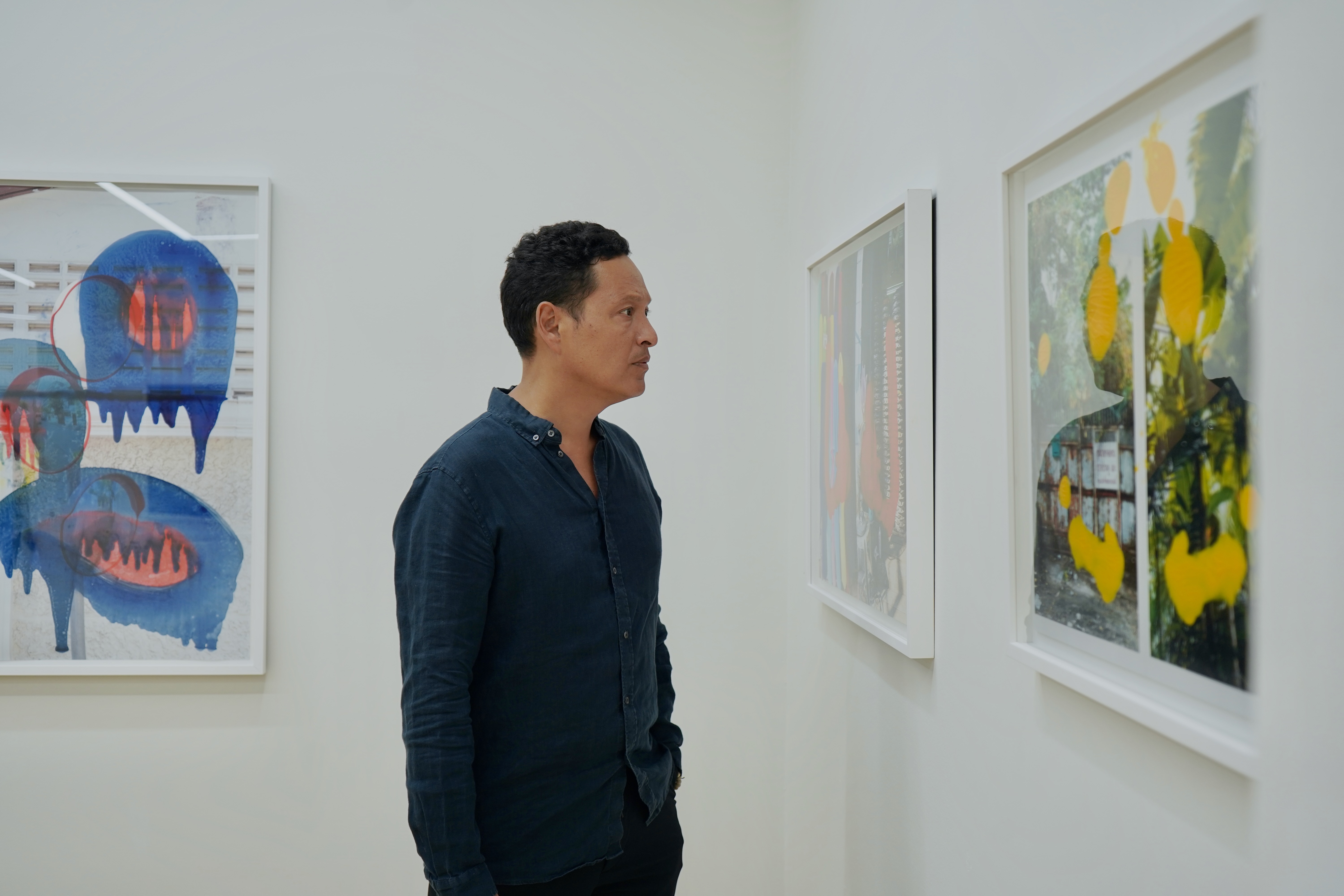
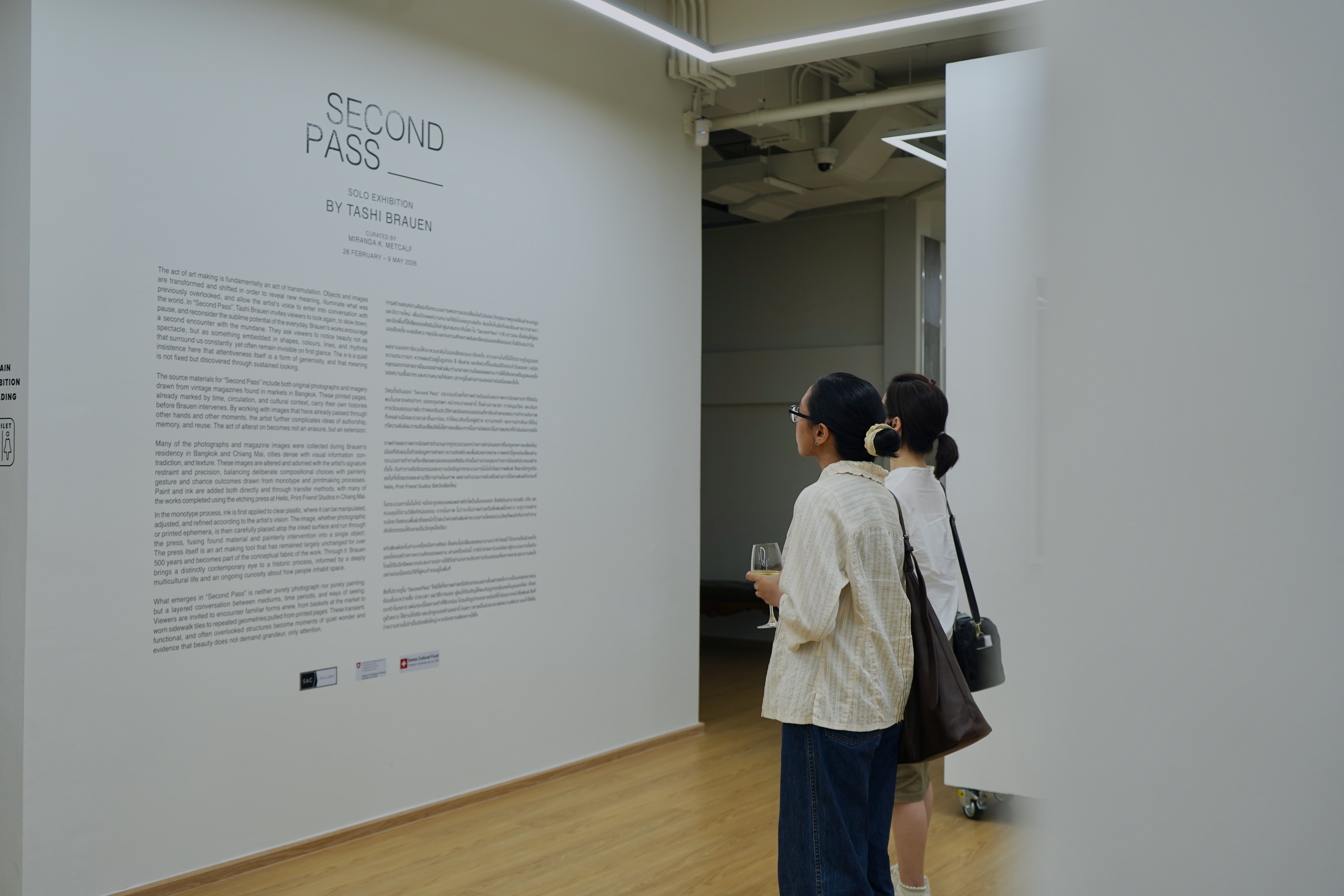
“Second Pass” is a new solo exhibition by Tashi Brauen, returning to present his work once again in Thailand. Here, he invites viewers to slow their pace and turn back towards what might otherwise go unnoticed. Through photographic works developed while wandering through the city’s smaller streets and alleyways, he observes fragments, minor details, and fleeting forms that may appear insignificant to some. These are then reworked through colour printing techniques and the use of old magazines, drawing out a renewed sense of interest in what might once have seemed unimportant.
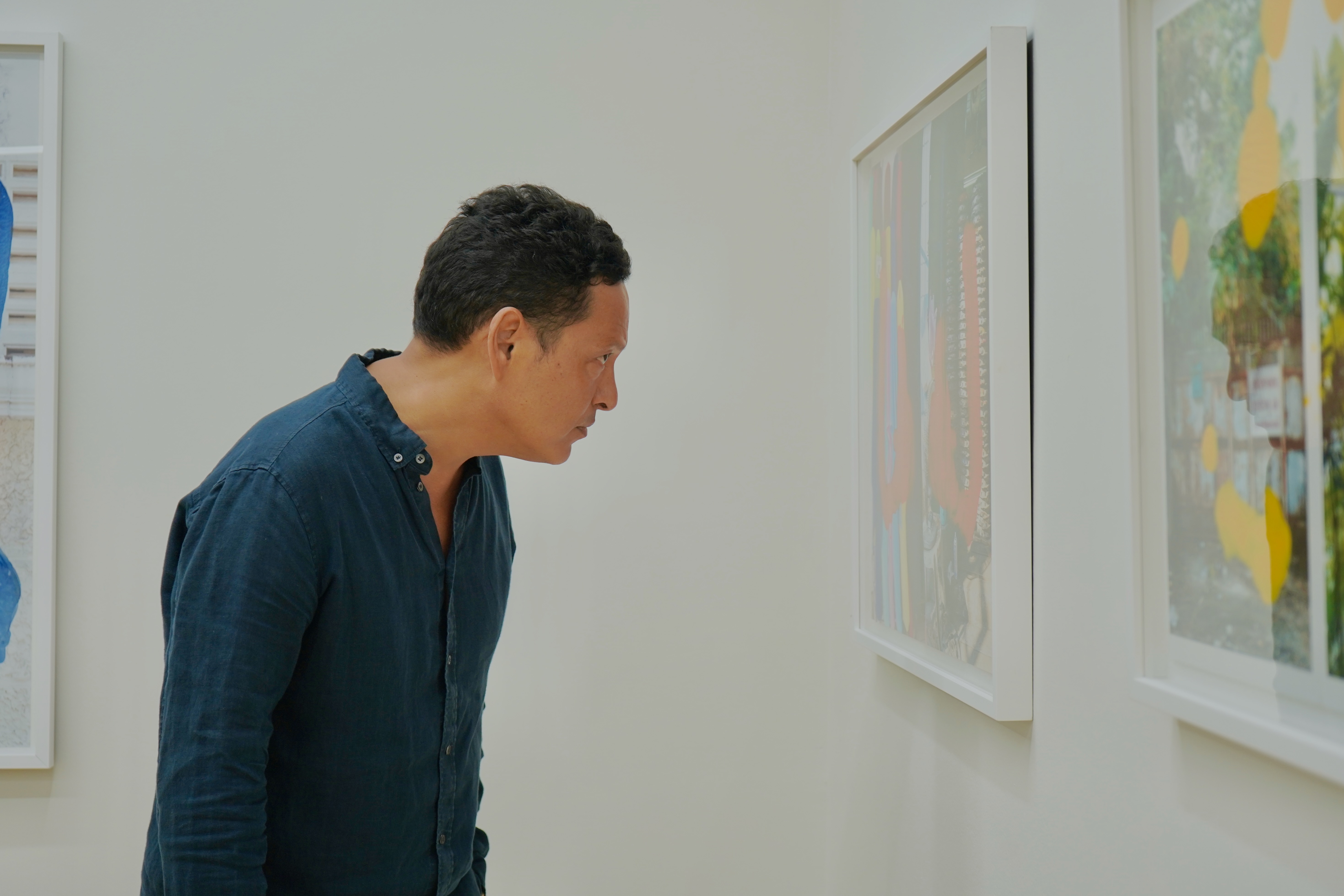
All of the works in this exhibition were created during his time as an artist in residence in Bangkok and Chiang Mai. Rather than bringing earlier works from Switzerland, he chose to begin again, allowing this body of work to feel immediate and rooted in his experience of Bangkok itself.
“It’s a journey that brings together drawing and photography,” he explains, speaking across continents from France. The conversation moves between his relationship with Thailand, his experience as an artist in residence, the many perspectives he encountered while working here, and the processes behind the exhibition.
01
“My first time was probably around twenty years ago. I came backpacking with my girlfriend. We travelled for quite a long time, taking a bus up north to Chiang Mai and then on to Laos. That was the first trip. After that, I didn’t return for quite a while.”
Over the years, his work has been shown in several places across Thailand, including Serindia Gallery, as well as the solo exhibition "Hold on to That Paper Again" at SAC Gallery, presented in collaboration with Ronewa Art Projects and the Embassy of Switzerland in Thailand.
“In a way, I’ve been coming throughout my life, but always on short trips, around two weeks each time,” he says, smiling.
This visit, however, was different. As part of the SAC Residency in Bangkok and Chiang Mai, Brauen spent time seeking inspiration from both cities. He moved through various neighbourhoods of Bangkok, while also exploring the more natural environment of Chiang Mai.
This time, he stayed for 59 days, nearly two months, longer than any of his previous visits. Long enough to begin seeing new dimensions that had not revealed themselves before. Having access to a studio in Bangkok also allowed him to focus more fully and work with greater concentration.
The project began in early 2026, when the weather in the city was still comfortable enough to walk through it each day. Along the way, he gathered impressions through both observation and the camera lens, carrying them back to the studio to be developed into works.

“Oh, I can’t walk as much anymore,” he says with a laugh, recalling the sudden shift in weather. “The climate is very different compared to Switzerland. When you walk, you really feel what distance combined with heat means.”
02
The rhythm of life in different parts of the city is something he became increasingly aware of. Some areas are dense and fast-moving, others quiet and still. Certain places feel chaotic, while others unfold at a slower pace.
“Most of my experiences come from walking without a destination. The unexpected becomes the normal state. I let myself be guided, not only by what I see, but also by sound, by smell, and by the atmosphere of each place. These senses lead me through different areas.”
Talad Noi, Yaowarat, Phahurat, Siam, Lumpini Park, Pak Khlong Talat, Chatuchak Market, Kudeejeen, Witthayu Road, as well as the areas surrounding the SAC Gallery studio, are among the places he moved through in Bangkok. Some were visited more than once, each time offering a different perspective. These shifting views eventually became part of the visual language and underlying concept of the exhibition.
“I understand Bangkok a little better now, at least where things are. It’s such a big city. Every time I come back, it feels like a new place. This time, staying longer allowed me to see its scale and diversity more clearly.”
After five weeks in Bangkok, he shifted his pace, heading north to Chiang Mai. Bringing his photographs with him, he continued working at Hello, Print Friend Studios.
“I had photographs from Bangkok that I hadn’t printed yet, so I went to see a friend there. She helped me with printing in the studio. I wanted to experiment with monotype printing on my own photographs, so I found a large-scale print studio in Chiang Mai.”
Working across two cities so distinct in character added further layers to the work.

“Chiang Mai is beautiful. My first impression was simply ‘wow’. The sky was so blue, and nature felt very close. It’s different from Bangkok, which moves quickly. The atmosphere is different. Chiang Mai feels almost like a small neighbourhood within Bangkok. You can get around by bicycle in ten minutes. Everything feels easy. I worked very intensively during those ten days. I really liked the rhythm of life there.
“The biggest difference is that Chiang Mai is surrounded by nature that feels very close. You can see the mountains from your hotel. It feels more grounded, with fewer tall buildings. You can see where the city ends.” For him, this sense of proximity made Chiang Mai feel, in some ways, closer to Switzerland.
By contrast, Bangkok requires constant negotiation. “You always have to think about how you’re going to get somewhere. Traffic shapes everything. You can’t do too many things in one day. For me, Chiang Mai feels much calmer, while Bangkok carries a kind of intensity. But it’s good to experience both. Chiang Mai feels quieter. People move at a different pace.”
03
For those familiar with Brauen’s earlier works, the difference in this exhibition is clear. Previous series often emphasised colour and simplicity, leaning towards abstraction, works that might require time to fully enter.
In this body of work, however, he expands his approach, incorporating collage techniques, particularly through the use of old magazines alongside street photography and his characteristic use of colour. This method began around five years ago, when he started working with cultural and archival publications in Switzerland.
“Images from magazines act as fragments of time. They carry culture. They are traces of the past brought into the present. When layered and rearranged, they form new constellations of meaning.”
While working in Thailand, he began looking for Thai magazines to incorporate into his process. After seeing documentation of To Fall From Grace by Naraphat Sakarthornsap, he asked the gallery team where to find similar materials.
“They suggested I try Chatuchak Market. When I went, I found so many shops filled with magazines and books. I had never seen anything like it. Going through those dusty stacks felt like discovering Thailand’s cultural history.”
He collected a wide range of materials, from art to fashion magazines, bringing them back to the studio to work alongside his photographs.

“I expanded this approach by using local materials and placing them next to my own images, creating a dialogue between what I encountered and my own experience. This time, I wanted to combine my perspective with fragments of Thailand’s past.”
An unexpected element emerged when Thai-language text entered the works through these materials. For Thai viewers, this introduced another layer of meaning.
“When I use Swiss magazines, the language is German, and it helps tell a story. In Bangkok, I feel more free because I can’t read the text. I respond only to the images. At the same time, it opens up other interpretations, especially for Thai viewers who can read the language. I really like that multiplicity.
“I know Thai viewers sometimes find it amusing because there are meanings I don’t understand. For example, it might be an old advertisement for Reebok or something like that. I like that there are meanings I can’t control, but that create another level of engagement for the audience.”
He also returns to simple techniques such as paint folding, something many people may have done as children. He began revisiting this method during the COVID-19 period, when access to studio equipment was limited.
“I like that simplicity. Even though the work might seem considered, I want it to feel accessible. I want people to think, ‘Oh, that’s interesting, I could try that.’ I like that sense of openness.
“I squeeze the paint directly from the tube and work with it. I don’t plan the colours too much beforehand. I respond to what I see in the magazine images. But when you print, the result always changes. There is always an element of chance.”

04
Although Brauen arrived with an initial concept, nearly all aspects of the work were realised in Thailand, within the limited timeframe of his residency.
“Some people say it’s very short. Some artists spend one to five years on a project. But I like the pressure of limited time. It prevents me from overthinking. Having more time doesn’t necessarily lead to more creativity. The energy you put into a short period can be very intense.”
During installation, curator Miranda K. Metcalf helped shape the final selection, bringing together the many layers of work into a cohesive whole.
“I came here with an open mind. I wanted this exhibition to be, in a way, a tribute to the city and the people who live here. Bangkok might feel chaotic at first, but there is a structure beneath it. Everything moves together in a kind of balance.”
He hopes that viewers, particularly those who live in Bangkok, might recognise their surroundings differently.
“I would be very happy if people here saw their city again, but from another perspective. Something familiar, but also beautiful in a different way.”
After encountering this body of work, you may find yourself slowing down. Looking again. Returning to the things that surround you. Perhaps noticing details that once passed unnoticed.
Whether the world around you feels calm or chaotic, something remains, waiting to be seen—again.
* denotes required fields
We will process the personal data you have supplied in accordance with our privacy policy (available on request). You can unsubscribe or change your preferences at any time by clicking the link in our emails.